How most people check site speed (and why it fails)
Run a speed test, get a number, feel something, close the tab. Here is why the check-it-by-hand ritual misses the slowdowns that actually cost you money.
Almost everyone checks site speed the same way. Someone says the site feels slow, or a blog post scares you about Core Web Vitals, so you open a speed test, paste in your URL, and run it once. A number comes back. You feel good or bad about it, maybe screenshot it, and close the tab.
Then nobody looks again for two months.
This is not a discipline problem. It is what the tools invite you to do: they answer "how fast is this page right now" and nothing else. The problem is that "right now" is almost never when your site gets slower.
Your site changes weekly. Your checks happen quarterly.
A working store is not a static object. Apps get installed and updated. Themes get version bumps. Marketing adds a pixel. A new collection ships with hero images straight off the camera. Each one is a small, reasonable decision, and each one lands on your page weight and your load time.
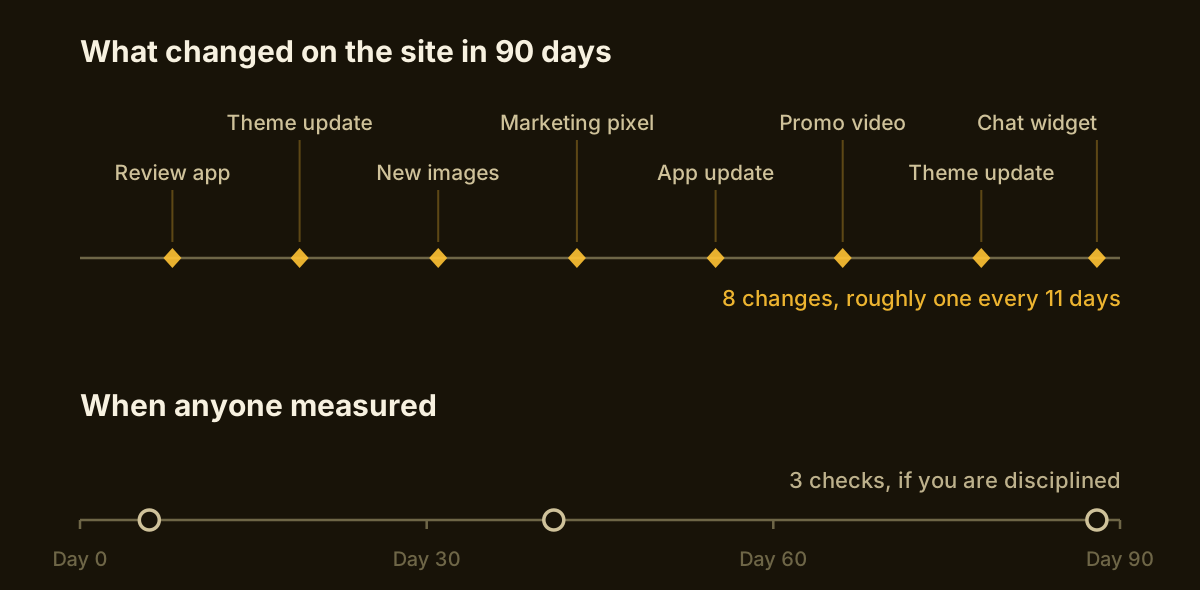
The math does not work. If the site changes every week or two and you measure every month or two, most changes are never measured at all. You find out about the bad ones from a sales report.
The one time you checked, you got lucky
Here is the same 90 days as a story. A heavy app update ships on day 33. The site gets meaningfully slower and stays that way.
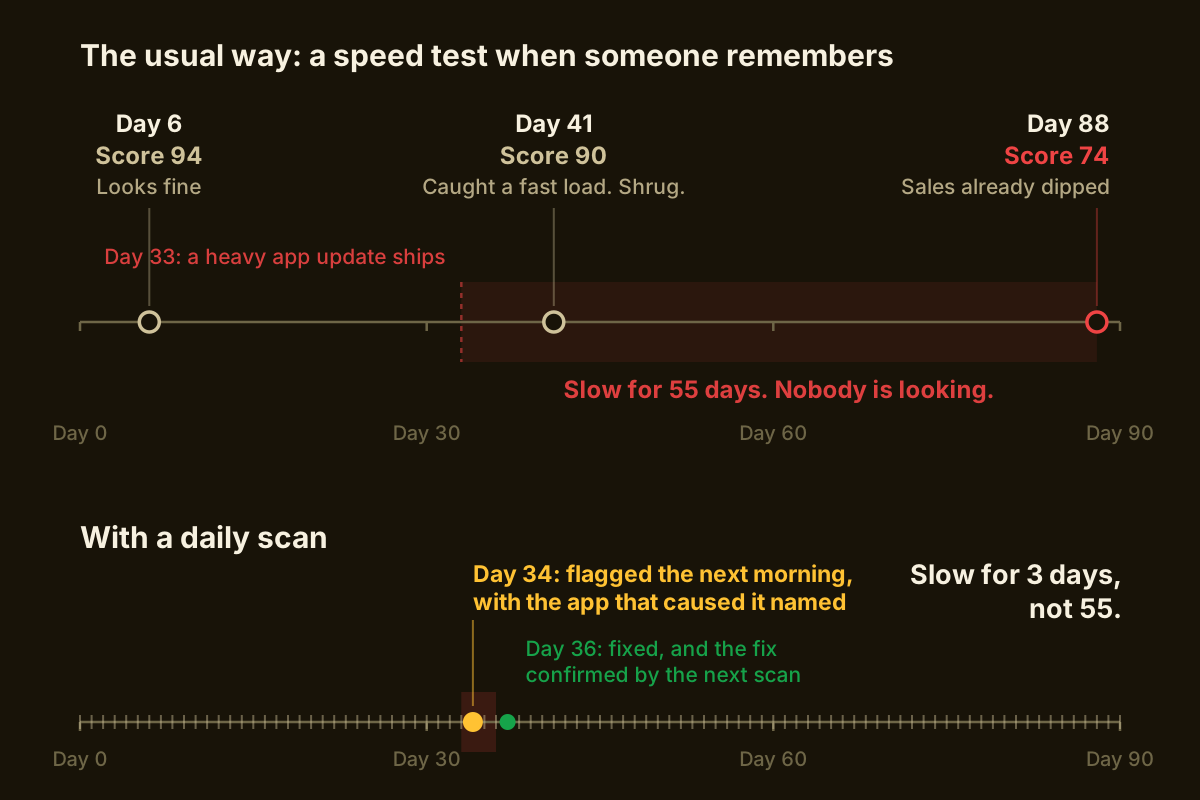
Notice the check on day 41. Someone actually did look after the regression shipped, and the test came back fine anyway, because a single run is a coin flip. Page speed bounces around load to load: network jitter, caches, third party scripts having a slow moment. One run can easily land on a lucky load and wave you past a real problem. (How we get numbers you can trust out of noisy loads is its own post.)
So the regression lives for 55 days. On the daily-scan timeline, the same regression is flagged the next morning, with the app that caused it named, and it is fixed two days later. Nothing about the fix got easier. The only thing that changed is when you found out.
A number without history is trivia
Even when a manual check catches something, it cannot answer the questions that matter next: when did this start, what changed that day, and is it still getting worse? A single score has no memory. You are left scrolling Slack for the last screenshot someone posted, which was from a different tool, on a different connection, measuring a different page.
The fix is not running more manual tests. It is making the test something that happens without you: the same pages, under the same conditions, every day, with every result kept and compared against the period before. Speed stops being a vibe and becomes a line you can read.
That is the whole idea behind Raptify. Every page that matters, scanned daily (hourly if you want), graded, trended, and explained when something moves.
Your site changed this week. Find out what that did, or start with a free scan and see where you stand today.